
Optimized Tissue Culture Protocol for Producing Virus-Free Potato Plants from Major Cultivars in Bangladesh
-
Md. Abdul Main
Tissue Culture Laboratory, Divine Agro Tissue Culture Ltd., Chowgacha, Jashore, Bangladesh
Mohammad Shahjahan MonjilDepartment of Plant Pathology, Bangladesh Agricultural University, Mymensingh, Bangladesh
Mohammad Zahir Ullah

Food Crop Section, Bangladesh Institute of Research and Training on Applied Nutrition, Head Office, Arayhazar, Narayangonj, Bangladesh
| Received 19 Nov, 2025 |
Accepted 10 Feb, 2026 |
Published 31 Mar, 2026 |
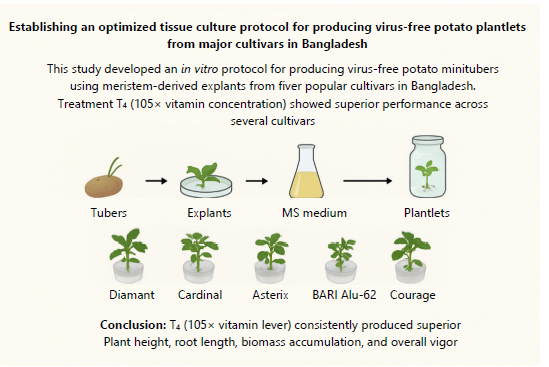
Background and Objective: Potato production in Bangladesh is hindered by viral infections that reduce yield and quality. Developing an optimized in vitro protocol for virus-free mini-tuber production is essential for improving seed quality. This study aimed to establish an efficient meristem-based tissue culture method using sprouts from five major potato cultivars-BARI Alu-7 (Diamant), BARI Alu-8 (Cardinal), BARI Alu-25 (Asterix), BARI Alu-29 (Courage), and BARI Alu-62- and to evaluate the influence of graded vitamin stock concentrations on plant regeneration performance. Materials and Methods: Meristem explants from each variety were cultured on media supplemented with five vitamin stock concentrations: T1 (90×), T2 (95×), T3 (100×), T4 (105×), and T5 (110×), and a control (T6). The vitamin mixtures differed in Glycine, Thiamine, Nicotinic acid, and Pyridoxine HCl content per 250 ml D2O. Growth parameters, including plant height, root length, fresh and dry biomass of shoots and roots, number of nodes, and number of leaves, were recorded. Comparative performance across treatments was analyzed to determine the optimal formulation. All recorded data were analyzed using ANOVA under a Completely Randomized Design (CRD), and treatment means were compared by Duncan’s Multiple Range Test at p≤0.05 using Statistix 10. Results: The T4 (105×) vitamin concentration showed the most consistent and superior response across the majority of varieties. In Diamant, T4 produced the highest plant height, root length, shoot biomass, and node number. Cardinal responded best to T1 for shoot and root biomass and leaf number, while T3 recorded faster shoot initiation and greater height. In Asterix, T4 led in early shoot initiation, dry biomass, and leaf count. For BARI Alu-62, T4 produced the highest root length and biomass, whereas T1 enhanced node and leaf formation. Overall, T4 exhibited the strongest performance across multiple parameters and cultivars. Conclusion: The 105× vitamin formulation (T4) demonstrates strong potential as an optimized medium for producing vigorous, virus-free potato plantlets suitable for mini-tuber production in major Bangladeshi cultivars. Its consistent performance across varieties highlights its applicability for large-scale clean seed programs. Future studies may validate this protocol at field-scale and refine it for additional local cultivars.
Graphical abstract
INTRODUCTION
The potato (Solanum tuberosum) is cultivated in over 100 countries and plays a significant role in global agriculture as the leading non-grain food crop. In 2023, global potato production reached a record 383 million tons, reflecting its adaptability, high yield, and nutritional value. Developing countries now contribute more than half of global output, with demand steadily rising due to population growth and dietary diversification. Forecasts by the FAO predict that global potato yield will reach approximately 23 tons per hectare by 2025. Asia, Africa, and Latin America are expected to achieve a combined output of 320 million tons-64% of global production, highlighting the crop’s increasing relevance in food security and economic development1,2.
In Bangladesh, the potato is emerging as a major cash crop. During the 2022-2023 growing season, the country cultivated 455,523 hectares and produced over 10.4 mL metric tons, an increase of 2.3% from the previous year3. This steady growth underscores the potato’s expanding role in the national food system and economy.
Plant tissue culture, first proposed by Gottlieb Haberland in 1902 (regarded as the father of tissue culture), is a vital tool in modern plant biotechnology. Plant tissue culture is widely used for the rapid multiplication of virus-free potato planting material and plays a critical role in modern seed potato production systems. The success of in vitro propagation largely depends on the composition of the culture medium, particularly the type and concentration of vitamins that regulate enzymatic activity, cellular metabolism, and morphogenetic responses. Murashige and Skoog (MS) medium is commonly employed for potato micropropagation; however, several studies have reported that the standard vitamin formulation may not be optimal for all cultivars. Thiamine (vitamin B1) functions as an essential cofactor in carbohydrate metabolism and has been shown to promote cell division and shoot development, while nicotinic acid and pyridoxine contribute to amino acid synthesis and overall metabolic balance. Previous research has demonstrated that altering vitamin concentrations in MS medium can significantly influence shoot initiation, plantlet vigor, rooting efficiency, and biomass accumulation in potato and other solanaceous crops. Despite these findings, comparative evaluations of graded vitamin concentrations across multiple commercially important potato cultivars remain limited, particularly under tropical and subtropical production systems4.
Tissue culture has significant value for both research and commercial applications. It enables the rapid multiplication of true-to-type, disease-free plantlets, including in vitro-produced potato clones. These techniques are increasingly integrated into seed production systems worldwide to improve crop quality and yield5.
This study aims to explore the role of plant tissue culture in producing disease-free, high-quality potato plantlets, with a focus on understanding the key stages and nutritional requirements involved in successful in vitro propagation. It further seeks to highlight the importance of tissue culture techniques in strengthening seed systems and promoting sustainable agricultural practices, particularly in developing countries such as Bangladesh.
MATERIALS AND METHODS
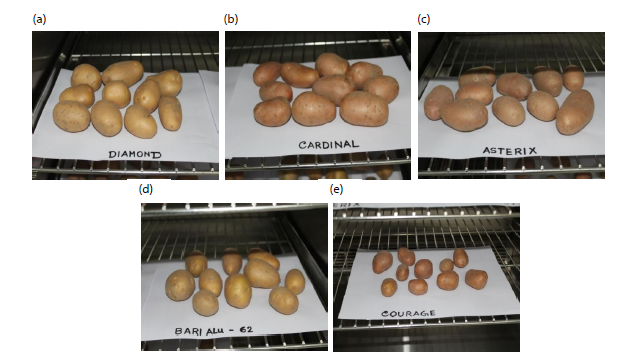
Plant materials: Five potato varieties-BARI Alu-7 (Diamant), BARI Alu-8 (Cardinal), BARI Alu-25 (Asterix), BARI Alu-29 (Courage), and BARI Alu-62 were used in this experiment Fig. 1. The tubers were obtained from the Tuber Crop Research Centre of the Bangladesh Agricultural Research Institute (BARI).
Experimental location: The experiment was set up at Divine Agro Tissue Culture Ltd., Chowgacha, Jashore, and at the Microbiology and Bio-Control Laboratory of the Department of Plant Pathology, Bangladesh Agricultural University. The time period of the study was November 2019-March, 2023. Laboratory preparations commenced in January 2019, beginning with the collection and organization of the required list of chemicals and instruments to be used in the study.
Culture media: Murashige and Skoog (MS) medium and liquid medium were used as the basal media for plant tissue culture experiments. These media provided essential nutrients and a controlled environment for optimal growth and development of the explants.
Preparation of stock solutions: The first step in preparing the culture medium was the formulation of stock solutions for macronutrients, micronutrients, iron (Fe-EDTA), vitamins, and plant growth regulators. Each group of compounds was prepared separately to ensure precise concentrations and to facilitate the quick preparation of the final culture media.
Macronutrient stock solution (Stock 1): The macronutrient stock solution was prepared at ten times (10×) the final working concentration. Accurately weighed salts required for 1 liter of the MS medium were multiplied by 10 and dissolved in approximately 750 mL of distilled water (DW). All salts were added sequentially and stirred thoroughly to ensure complete dissolution, except for Calcium Chloride (CaCl2), which was prepared as a separate solution to prevent precipitation. After complete dissolution, the final volume was adjusted to 1 L using DW. The prepared solution was transferred to clean, sterilized glass containers and stored at 4°C for further use.
Micronutrient stock solution (Stock 2): A 100× concentrated stock solution of all micronutrients was prepared. Due to the very low required concentrations of copper and cobalt, a separate 100× stock solution of these two salts was first prepared. An appropriate volume from this was then added to the main micronutrient stock solution. The final solution was stored at 4°C in a refrigerator.
Iron (Fe-EDTA) stock solution (Stock 3): An iron-EDTA stock solution was prepared at 100× the final medium concentration in one liter of distilled water (DW). To prepare this, FeSO4·7H2O and Na2EDTA were dissolved in 750 mL DW by heating in a water bath until completely dissolved. The final volume was brought to 1 liter with additional DW. This solution was stored in an amber-colored bottle or wrapped in aluminum foil to prevent light exposure and kept at 4°C.
|
| Table 1: | Effect of different vitamin concentrations of glycine, thiamine, nicotinic acid, and pridoxine HCl on growth and morphological parameters of the Diamant potato variety | |||
| Treatment | Days to root initiation |
Days to shoot initiation |
Plant height (cm) |
Root length(cm) |
Fresh Wt. of shoot (g) |
Fresh Wt. of root (g) |
Dry Wt. of shoot (g) |
Dry Wt. of root (g) |
No. of nodes |
No. of leaves |
| T1 | 4.000a | 5.667b | 6.633b | 1.687de | 0.100bc | 0.005c | 0.008a | 0.001a | 10.000a | 11.5ab |
| T2 | 4.333a | 9.333a | 6.000b | 2.233cd | 0.069c | 0.012c | 0.008a | 0.001a | 7.333b | 12.0a |
| T3 | 4.333a | 4.667b | 7.500ab | 3.500b | 0.137b | 0.584a | 0.015a | 0.004a | 6.333bc | 8.5b |
| T4 | 4.333a | 8.667a | 9.000a | 5.200a | 0.275a | 0.077b | 0.017a | 0.009a | 8.000ab | 9.0ab |
| T5 | 4.667a | 6.333b | 7.000b | 1.267e | 0.082bc | 0.013c | 0.010a | 0.001a | 5.667bc | 9.0ab |
| T6 | 4.000a | 5.667b | 6.833b | 2.667c | 0.099bc | 0.009c | 0.011a | 0.002a | 4.333c | 11.0ab |
| CV( %) | 14.578 | 13.58 | 12.667 | 16.706 | 17.643 | 9.933 | 38.248 | 33.604 | 19.791 | 15.52 |
| Values within a column followed by the same letter are not significantly different at the 5% level according to DMRT, Legend: T1: 90×, T2: 95×, T3: 100×, T4: 105×, T5: 110× and T6: Control) | ||||||||||
Vitamin stock solution (stock 4): The vitamins used for MS medium preparation included Myo-inositol, Nicotinic acid (Vitamin B3), Pyridoxine HCl (Vitamin B6), Thiamine HCl (Vitamin B1), and Glycine. Each was prepared at 100× its final concentration. The vitamins were dissolved in 400 mL of DW, and the volume was adjusted to 1 L with additional DW. The solution was labeled and stored at 4°C.
Preparation of MS medium: To prepare 1 liter of Murashige and Skoog (MS) medium, the following steps were followed:
| • | 700 mL of double-distilled water (DDW) was added to a 1000 ml beaker | |
| • | The following stock solutions were added: 50 mL of MS Stock I, 5 mL each of MS Stock II (micronutrients), Stock III (Fe-EDTA), and Stock IV (vitamins), along with 30 g of sucrose | |
| • | The solution was stirred thoroughly using a magnetic stirrer and a hot plate until all components were completely dissolved | |
| • | 0.5 mL/L of IBA (at a concentration of 0.1 mg/mL) was added to the mixture | |
| • | The volume was made up to 1 liter with additional DDW | |
| • | The pH of the medium was adjusted to 5.80±0.1 using 1N NaOH or 0.1N HCl, as required | |
| • | For a solid medium, 8 g/L agar was added and melted by heating in an oven for 10 min. (Agar was omitted in the case of liquid media.) |
Agar preparation: For gelling, 8 g/L of agar was added to the medium. The mixture was then heated in a microwave oven for 8-10 min until the agar completely melted.
Treatments: Effect of vitamin strengths:
T1 -90 times: (Glycine-0.585 gm, Thiamin-0.029 gm, Nicotinic acid-1.417 gm and Pyridoxine Hcl-1.417 gm/250 mL of D2O)
T2-95 times: (Glycine-0.617 gm, Thiamin-0.030 gm, Nicotinic acid-1.496 gm and Pyridoxine Hcl-1.496 gm/250 mL of D2O)
T3-100 times: (Glycine-0.65 gm, Thiamin-0.032 gm, Nicotinic acid-1.57 gm and Pyridoxine Hcl-1.57 gm /250 mL of D2O),
T4-105 times: (Glycine-0.682 gm, Thiamin-0.034 gm, Nicotinic acid-1.653 gm and Pyridoxine Hcl-1.653 gm/250 mL of D2O)
T5-110 times: (Glycine-0.719 gm, Thiamin-0.035, Nicotinic acid-1.732 gm and Pyridoxine Hcl-1.732 gm /250 mL of D2O)
T6 -Control: Glycine-0.26 gm, Thiamin-0.013 gm, Nicotinic acid-0.63 gm and Pyridoxine Hcl-0.63 gm
Subculture: Regenerated plantlets were sub-cultured four weeks after the initial inoculation. Shoots were cut into smaller segments and transferred to freshly prepared, sterilized MS medium. Subcultured vials were maintained at 25±1°C with a 16 hrs photoperiod. Subculturing was carried out every 28 days, and observations were recorded regularly.
Experimental design: In laboratory conditions, a Completely Randomized Design (CRD) with five replications was used. For field experiments, a Randomized Complete Block Design (RCBD) with three replications was employed.
Data collection: The parameters were recorded under in vitro conditions three were days to shoot and root appearance, days to well-developed shoots and roots, shoot length or plant hseight (cm), root length (cm), number of leaves per explant, fresh weight of shoots and roots (mg), fresh weight (mg), dry weight of shoots and roots (mg), All the data were collected following plant destructive methods.
Statistical analysis: All recorded data were statistically analyzed using Analysis of Variance (ANOVA) following a Completely Randomized Design (CRD). Before analysis, data were examined for normality and homogeneity of variances to ensure compliance with ANOVA assumptions. When treatment effects were found to be significant, mean comparisons were performed using Duncan’s Multiple Range Test (DMRT). Differences among treatment means were considered statistically significant at the 5% probability level (p≤0.05), which is widely accepted in agricultural and biological research. Means followed by the same letter within a column were not significantly different. The coefficient of variation (CV%) was calculated to assess experimental precision. Statistical analyses were performed using Statistix 10.
RESULTS AND DISCUSSION
Observation on Diamant variety: Significant variation was observed for all the studied traits except days to root Initiation, dry weight of shoot and dry weight of root among treatments (Table 1). The longest time was recorded in T5 (4.667 days), while both T1 and T6 exhibited the shortest duration (4.00 days). The longest period to shoot initiation occurred in T2 (9.333 days), whereas the shortest was recorded in T3 (4.66 days). The tallest plants were observed in T4 (9.00 cm), followed by T3 (7.50 cm), while the shortest were found in T2 (6.00 cm). Root length varied significantly among treatments. The longest roots (5.2 cm) were obtained in T4, whereas the shortest roots (1.267 cm) were recorded in T5.
The maximum weight of fresh shoot T4 (0.275 gm) was observed and the minimum weight (0.069 gm) was found in T2. The maximum weight of fresh root (0.584 gm) was observed in T3 and the minimum weight (0.005 gm) was found in T1 (Table 1). The maximum dry weight per plant (0.017 gm) was observed in T4 and the minimum dry weight (0.008 gm) was observed same in T1 and T2 treatments. The maximum dry weight of root per plant (0.009 gm) was observed in T4 and the minimum dry weight of root (0.001 gm) was observed same in T1, T2 and T5. The maximum no. of nods (8.0) found at treatment T4 and the lowest no of nods found at the control treatments. The maximum numbers of leaves (12.0) were recorded in T2, which was statistically identical with T1. The minimum number of leaf (8.5) was observed in T3. In nutshell, on the basis of plant height, length of root, fresh weight of shoot, dry weight of shoot, dry weight of root and number of node T4 treatment showed the best result for Diamant variety. But for the number of leaves per plant T2 is the best.
Observation on Cardinal variety: Significant variation was observed in almost all the traits except fresh weight of shoot, number of node and number of leaves (Table 2). Maximum (5.5) days to initiation of root at T1, followed by T4, T5 and T6 take same Whereas T3 take minimum (3.5) days. The Maximum days to shoot initiation start at T2 (9.333) days, and lowest was at T3 (4.66) days. The highest plant height was found at T3 (3.8 cm) T1 (11.5 cm) followed by T3 (7.5 cm) and lowest found at T4 (4.7 cm). The highest length of root (3.8 cm) was recorded from T3, while the lowest length was at T4 (2.25 cm). The maximum weight of fresh shoot T1 (0.438 gm) was observed, and the minimum weight (0.074 gm) was found in T6. The maximum weight of fresh root (0.225 gm) was observed in T1 and the minimum weight (0.03 gm) was found in T6. The maximum dry weight of shoot (0.037 gm) was observed in T1 and the minimum dry weight (0.01 gm) was observed same in T1 treatments. The maximum dry weight of root per plant (0.027 gm) was observed in T1 and the minimum dry weight of root (0.001 gm) was observed in T3. The maximum no. of nods (10.0) found at treatment no T1 and the lowest no of nods was found at the Control treatments. The maximum number of leaves (14.0) was recorded in T1, the minimum number of leaf (9.0) was observed in T6. On the basis of fresh weight of shoot, fresh weight of root, dry weight of shoot, dry weight of root, no. of nodes per plant and the number of leaves per plant T1 showed the best result then the other treatments. But on the days to shoot initiation, plant height, length of root T3 is the best for the cardinal potato variety.
| Table 2: | Effect of different vitamin concentrations of glycine, thiamine, nicotinic acid, and pyridoxine HCl on growth and morphological parameters of the Cardinal potato variety | |||
| Treatment | Days to root initiation |
Days to shoot initiation |
Plant height (cm) |
Root length (cm) |
Fresh Wt. of shoot (g) |
Fresh Wt. of root (g) |
Dry Wt. of shoot (g) |
Dry Wt. of root (g) |
No. of nodes |
No. of leaves |
| T1 | 5.5a | 5.5bc | 11.5a | 3ab | 0.438a | 0.225a | 0.037a | 0.027a | 10a | 14a |
| T2 | 4.5ab | 6bc | 9.167ab | 3.4ab | 0.123a | 0.015d | 0.01b | 0.022ab | 8a | 10a |
| T3 | 3.5b | 4.5c | 4.767b | 3.8a | 0.392a | 0.037c | 0.01b | 0.001c | 8.333a | 10a |
| T4 | 5a | 6.5abc | 4.7b | 2.25b | 0.195a | 0.064b | 0.021ab | 0.005bc | 8.667a | 11a |
| T5 | 5a | 7.5ab | 6.667ab | 2.55b | 0.189a | 0.057b | 0.013b | 0.005bc | 8.667a | 10.667a |
| T6 | 5a | 8.5a | 8ab | 3.4ab | 0.074a | 0.03cd | 0.014b | 0.007bc | 8a | 9a |
| CV ( % ) | 16.079 | 18.549 | 35.476 | 19.969 | 89.9 | 24.543 | 40.492 | 151.075 | 18.964 | 24.353 |
| Values within a column followed by the same letter are not significantly different at the 5% level according to DMRT. Legend: T1: 90×, T2: 95×, T3: 100×, T4: 105×, T5: 110× and T6: Control) | ||||||||||
| Table 3: | Effect of different vitamin concentrations of glycine, thiamine, nicotinic acid, and pridoxine HCl on growth and morphological parameters of the Asterix potato variety | |||
| Treatment | Days to root initiation |
Days to shoot initiation |
Plant height (cm) |
Root length (cm) |
Fresh Wt. of shoot (g) |
Fresh Wt. of root (g) |
Dry Wt. of shoot (g) |
Dry Wt. of root (g) |
No. of nodes |
No. of leaves |
| T1 | 5.333a | 9.667ab | 9.2a | 5.5ab | 0.186a | 0.014d | 0.01a | 0.001a | 8a | 11.667a |
| T2 | 5ab | 10.333a | 8.333a | 3.25cd | 0.068a | 0.013d | 0.007a | 0.002a | 7.667a | 8.667a |
| T3 | 5ab | 10a | 6a | 1.8d | 0.161a | 0.08b | 0.024a | 0.006a | 9a | 11.333a |
| T4 | 5.667a | 11a | 8.167a | 4.8bc | 0.178a | 0.105a | 0.008a | 0.005a | 7a | 9a |
| T5 | 5ab | 6.333c | 6.667a | 5.75ab | 0.189a | 0.057c | 0.013a | 0.006a | 8.667a | 10.667a |
| T6 | 4.333b | 7bc | 4.833a | 7.5a | 0.069a | 0.017d | 0.008a | 0.003a | 7.667a | 7.333a |
| CV (%) | 8.075 | 16.868 | 32.82 | 24.057 | 46.107 | 22.869 | 43.91 | 36.01 | 18.4 | 1.876 |
| Values within a column followed by the same letter are not significantly different at the 5% level according to DMRT. Legend: T1: 90×, T2: 95×, T3: 100×, T4: 105×, T5: 110× and T6: Control) | ||||||||||
Observation on Asterix variety: Significant variation was found for all the characters for all the treatments except plant height, fresh weight of leaves, dry weight of shoot, dry weight of root, number of node and number of leaves (Table 3). Maximum (5.33) days to root initiation at T4 followed by T1 and T5 take a minimum (4.00) days. The Maximum days to shoot initiation start at T4 (8.66) days and lowest was at T2 (4.66) days. The highest plant height found at T2 (11.5 cm) Followed by T1 (9.167 cm) and the lowest found at T4 (4.700 cm). The highest length of root (4.667 cm) was recorded from T6 while the lowest length was at T3 (2.2 cm).
The maximum weight of fresh shoot T1 (0.438 gm.) was observed and the minimum weight (0.074 gm) was found in T6. The maximum weight of fresh root (0.030 gm) was observed in T6 and the minimum weight (0.03 gm) was found in T6. The maximum dry weight of shoot per plant (0.021 gm) was observed in T4 and the minimum dry weight (0.001 gm) was observed same in T1, and T3. The maximum dry weight of root per plant (0.006 gm) was observed in T4 and T5 the minimum dry weight of root (0.002 gm) was observed in T1 and T2. The maximum number of nods (10.0) was found at treatment no T1, and the lowest no of nods (8.00) found at T6 (Control) treatments. The maximum numbers of leaves (11.01) were recorded in T4. The minimum number of leaf (8.00) was observed in T6. On the basis of days to shoot initiation, dry weight of shoot, dry weight of root and the number of leaf of potato T4 showed the best result for Asterix variety.
Observation on Bari Alu-62 variety: No significance variation was observed in days to root initiation, almost all Treatments shown same duration at (Table 4). Maximum (5.00) days at T1 and T6 followed by T2 and T3 take minimum (4.33) days. Significant variation was observed among the different treatments of vitamins in respect of days to shoot initiation. The maximum days to shoot initiation start at T1 (9.667) days and lowest was at T6 (6.00) days. A Significance difference was observed in plant height. Highest plant height found at T5 (9.83 cm) followed by T4 (7.50 cm) and the lowest found at T1 (4.00 cm). Length of root of potato plantlet varied significantly among the varieties under study (Table 4). The highest length of root (4.167 cm) was recorded from T4 while the lowest length was at T1 (1.20 cm).
| Table 4: | Effect of different vitamin concentrations of glycine, thiamine, nicotinic acid, and pridoxine HCl on growth and morphological parameters of the Bari Alu 62 potato variety | |||
| Treatment | Days to root initiation |
Days to shoot initiation |
Plant height (cm) |
Root length (cm) |
Fresh Wt. of shoot (g) |
Fresh Wt. of root (g) |
Dry Wt. of shoot (g) |
Dry Wt. of root (g) |
No. of nodes |
No. of leaves |
| T1 | 5a | 9.667a | 4d | 1.2b | 0.946a | 0.248b | 0.004a | 0.001a | 9a | 11.667a |
| T2 | 4.333a | 9.333a | 6bcd | 2.233b | 0.069d | 0.012c | 0.008a | 0.001a | 7.333ab | 9.333b |
| T3 | 4.333a | 9.333a | 4.83cd | 2.267b | 0.148c | 0.324a | 0.046a | 0.003a | 5.667bc | 8.333b |
| T4 | 4.667a | 9.333a | 7.5ab | 4.167a | 0.244b | 0.044c | 0.012a | 0.004a | 6.667bc | 9.667ab |
| T5 | 4.667a | 6b | 9.833a | 4.067a | 0.181c | 0.038c | 0.017a | 0.008a | 6.333bc | 9b |
| T6 | 5a | 7.333ab | 7.16bc | 3.667a | 0.142c | 0.07c | 0.008a | 0.008a | 5c | 9.333b |
| CV | 10.102 | 14.933 | 20.65 | 23.97 | 13.064 | 27.55 | 30.037 | 30.87 | 16.583 | 12.578 |
| Values within a column followed by the same letter are not significantly different at the 5% level according to DMRT. Legend: T1: 90×, T2: 95×, T3: 100×, T4: 105×, T5: 110× and T6: Control) | ||||||||||
| Table 5: | Effect of different vitamin concentrations of glycine, thiamine, nicotinic acid, and pridoxine HCl on growth and morphological parameters of the Courage potato variety | |||
| Treatment | Days to root initiation |
Days to shoot initiation |
Plant height (cm) |
Root length (cm) |
Fresh Wt. of shoot (g) |
Fresh Wt. of root (g) |
Dry Wt. of shoot (g) |
Dry Wt. of root (g) |
No. of nodes |
No. of leaves |
| T1 | 4.000a | 5.667b | 6.633b | 1.687de | 0.100bc | 0.005c | 0.008a | 0.001a | 10.000a | 12.000a |
| T2 | 4.333a | 9.333a | 6.000b | 2.233cd | 0.069c | 0.012c | 0.008a | 0.001a | 7.333b | 9.333bc |
| T3 | 4.333a | 4.667b | 7.500ab | 3.500b | 0.137b | 0.584a | 0.015a | 0.004a | 6.333bc | 8.667bc |
| T4 | 4.333a | 8.667a | 9.000a | 5.200a | 0.275a | 0.077b | 0.017a | 0.009a | 8.000ab | 10.667ab |
| T5 | 4.667a | 6.333b | 7.000b | 1.267e | 0.082bc | 0.013c | 0.01a | 0.001a | 5.667bc | 7.333c |
| T6 | 4.000a | 5.667b | 6.833b | 2.667c | 0.099bc | 0.009c | 0.011a | 0.002a | 4.333c | 8.000c |
| CV (% ) | 14.578 | 13.58 | 12.667 | 16.706 | 17.643 | 9.933 | 38.248 | 33.604 | 19.791 | 14.725 |
| Values within a column followed by the same letter are not significantly different at the 5% level according to DMRT. Legend: T1: 90×, T2: 95×, T3: 100×, T4: 105×, T5: 110× and T6: Control) | ||||||||||
Fresh weight of shoot was significantly influenced by the treatments of vitamins. The maximum weight of fresh shoot T4 (0.244 gm) was observed, and the minimum weight (0.069 gm) was found in T2. Fresh weight of root was significantly influenced by the treatments. The maximum weight of fresh root (0.324 gm) was observed in T3, and the minimum weight (0.012 gm) was found in T2. Dry weight of shoot was not significantly influenced by the treatments. The maximum dry weight per plant (0.046 gm) was observed in T3 and the minimum dry weight (0.004 gm) was observed same in T1, treatments. The dry weight of root per plant was not significantly influenced by the treatments. The maximum dry weight of root per plant (0.008 gm) was observed in T5 and T6 and the minimum dry weight of root (0.001 gm) was observed in T1 and T2. Number of Node per plant was significantly influenced by the treatments of vitamins. The maximum no. of nods (9.00) found at treatment no T1 and the lowest no of nods (5.00) found at T6 Control treatments. Number of leaf of potato under the study varied significantly among each other (Table 4). The maximum numbers of leaves (11.66) were recorded in T1 and the minimum number of leaf (8.33) was observed in T3.
Observation on Courage variety: No significant variation was observed in days to root initiation, almost all Treatments shown same duration at (Table 5). Maximum (4.66) days at T5 followed by T2,T3 and T4 take same days and minimum (4.00) days at T1 and T6. Significant variation was observed among the different treatments of vitamins in respect of days to shoot initiation. The Maximum days to shoot initiation start at T2 (9.333) days and the lowest was at T1 and T6 (5.66) days. A significant difference was observed. Highest plant height was found at T4 (9.00 cm) followed by T3 (7.50 cm), and the lowest found at T2 (6.00 cm). Length of root of the potato plantlet varied significantly among the varieties under study (Table 5). The highest length of root (5.20 cm) was recorded from T4 while the lowest length was at T5 (1.26 cm). Fresh weight of the shoot was significantly influenced by the treatments of vitamins (Table 5). The maximum weight of fresh shoot T4 (0.275 gm) was observed and the minimum weight (0.069 gm) was found in T2. Fresh weight of root was significantly influenced by the treatments. The maximum weight of fresh root (0.58 gm) was observed in T3 and the minimum weight (0.005 gm) was found in T1 (Table 5).
Dry weight of shoot was not significantly influenced by the treatments. The maximum dry weight per plant (0.017 gm) was observed in T4 and the minimum dry weight (0.008 gm.) was observed same in T1, and T2 treatments. The dry weight of root per plant was not significantly influenced by the treatments. The maximum dry weight of root per plant (0.009 gm) was observed in T4 and the minimum dry weight of root (0.001 gm) was observed in T1, T2 and T2. The number of Node per plant was significantly influenced by the treatments of vitamins. The maximum no. of nods (10.00) found at treatment no T1 and the lowest no of nods (4.33) found at T6 Control treatments. Number of leaf of potato under the study varied significantly among each other (Table 5). The maximum numbers of leaves (12.22) were recorded in T1 followed by T4 (10.66) and the minimum number of leaf (8.00) was observed in T6.
DISCUSSION
On above the performance we can see in case of Diamant variety plant height, length of root, fresh weight of shoot, dry weight of shoot. The dry weight of root and number of node per plant T4 showed the best result then the other treatments but on the basis of number of leaf per plant T2 showed the best result. In Cardinal variety on the basis of days to root initiation, days to shoot initiation plant height, and length of root T3 showed the best result then the other treatments but on the other hand fresh weight of shoot. Fresh weight of root, dry weight of shoot, dry weight of root per plant, number of node per plant and the number of leaf per plant T1, showed the best result. In Asterix variety on the basis of dry weight of shoot, the dry weight of root per plant and the number of leaf of potato T4 showed the best result then the other treatments. In Bari Alu 62 variety on the basis of length of the root and fresh weight of root T4 showed the best result then the other treatments. On the other hand, number of leaves per plant, number of node per plant T1 showed the best result and in Courage variety plant height length of root, fresh weight of shoot, dry weight of shoot and the dry weight of root T4 showed the best result then the other treatments but on the basis of node per plant and number of leaf of potato T1 showed the best result. In case of root and shoot development T4 and number of node per plant and the number of leaf per plant T1, showed the best result.
Same type of positive effect found on Naphthalene Acetic Acid (NAA) and Benzyl Adenine (BA) with combinations of [(0, 4), (3, 2), (2, 3) and (4, 0) mg/L)] keeping all other components of MS basal media to be constant. Combination having 4 mg/L of BA without NAA significantly increased the number of shoots and nodes formed per plant. The largest number of roots per plant was obtained from T3, T2 and T4 with hormonal combinations of (4, 0), (3, 2) and (2, 3), respectively. The T5 assigned as control without any hormonal combination indicated the least performance in number of shoots and roots per plant. Therefore, T2 with hormone combination of 3 mg/L NAA and 2 mg/L BA is identified as the optimum level of combination of growth hormones for shooting and rooting of potato nodal culture in vitro condition6.
A same line of experiment refreshment protocol was designed to alleviate in vitro related stress in stock plants, which significantly improved the growth vigor and resulted in a 4- to 10-fold increase in transformation efficiency. Furthermore, long-term exposure to exogenous Indole-3-butyric acid that is usually used for the initiation of roots in vitro, was found to cause aberrant morphological phenotypes in potato7.
Effects of different concentrations of sucrose (20,30 and 40 g/L), BAP (0.0 and 2 mg/L) as well as MS strength basal media (full, ½MS and ¼MS) on the in vitro shoot proliferation in the Tissue Culture Laboratory, University of Tabriz. The number of lateral shoots was increased by using 2 mg/L BAP, but main shoot length was declined by addition of BAP on culture media. The number of nodes in MS full strengths was higher than ½MS and ¼ MS media. Maximum root number was observed in the media without BAP and high concentrations of sucrose. Minimum callus induction (an undesirable trait in the proliferation stage) was observed in free BAP media8.
The media used were as follows: M0 = 4.4 g/L MS medium9 +7 g/L agar; M1 = M0+30 g/L table sugar; M2 = M0+0.5 mg/L AIB and M3 = M0+30 g/L sugar+0.5 mg/L AIB. These media were prepared at pH 5.7±0.1, divided into jars and autoclaved for 20 min at a pressure of 120 bars. The results of this study indicated that M1 and M3 regenerated in vitro plantlets better than M0 and M2 did. Sugar likely had a positive effect on root length, stem diameter, number of nodes and number of opened leaves. These parameters strongly differentiated M1 from the other media. AIB had a positive effect on the root proliferation of in vitro regenerated plantlets in M2 medium. The combined effect of sugar and AIB had even greater effects on stem height, number of roots, number of leaves open and weight of in vitro plantlets, which strongly differentiated medium M3 from the other media. In conclusion, M3 proved to be the best media for in vitro plantlets production10.
It was showed that shoot initiation, shoot multiplication and root formation responses were significant (p<0.05) at different hormone levels and combinations. 91.67 and 87.5% of explants survived and initiated for Gudenie and Belete varieties, respectively on shoot initiation MS basal medium supplemented with combination of 2.0 mg/L BAP and 1.0 mg/L IAA. In both varieties, number of nodes/explant, number of shoots/explant and shoot length/explant were significantly (p<0.05) higher at 0.5 mg/L BAP and 2 mg/L Kn. Number of days to shoot emergence was also found to be shorter at this level of hormonal combination than other treatments. Number of roots/shoot, root length/shoot, root fresh and dry weight were significantly affected due to growth regulators combination11.
In vitro plantlets of three potato varieties; Asterix, Granola, and Diamant were treated with eight level of sucrose as 0, 3, 4, 6, 8, 10, 12 and 14% for 70 days of incubation producing microtuber. Asterix induces microtuber after 10.69 days, it was statistically shorter duration than other two varieties. Tuberization did
not occur without sucrose and were required a minimum (8.92 days) with 8% sucrose, while it delayed with either increasing or decreasing rate of sucrose concentration. A single number of microtuber was not formed in absence of sucrose after 28 days of incubation. Microtuber plantlet was the highest more or less in all varieties at harvest with 8% sucrose concentration. Hundred percent of microtuber below 250 mg induced in 3% sucrose concentration and from then the microtuber grade induction decreased with the increase of sucrose concentration. >500 mg grade microtuber produced by Granola (47.95%) with 10% sucrose while Diamant produced 50.15% above 500 mg grade microtuber with 14% sucrose. It is also noticeable by Astrerix variety where >500 mg microtuber were produced about 46.95% with 8% sucrose12.
Effects of different concentrations of sucrose (20, 30 and 40 g/L), BAP (0.0 and 2 mg/L) as well as MS strength basal media (full, ½MS and ¼MS) on the in vitro shoot proliferation in Tissue Culture Laboratory, University of Tabriz. Nodes were cut from in vitro potato shoots and cultured on MS strength basal media for shoot proliferation. Number of lateral shoots was increased by using 2 mg/L BAP, but the main shoot length was declined by addition of BAP on culture media. The number of nodes in MS full strengths was higher than ½MS and ¼MS media. Maximum root number was observed in the media without BAP and high concentrations of sucrose. Minimum callus induction (an undesirable trait in the proliferation stage) was observed in free BAP media13.
The best medium for shoot initiation was MS medium supplemented with 1.0 mg/L KIN. The favorable medium for multiplication was the tested medium augmented with 2.0 mg/L BA and 0.250 mg/L NAA. In addition, the most effective medium for elongation was the used medium enriched with 0.250 mg/L NAA. Furthermore, in vitro the shoots showed healthy root development when the tested medium was supplemented with a combination of 1.0 mg/L IBA and 0.50 mg/L NAA (rooting stage). The combination of sand:perlite:peatmoss (1:3:3, v:v:v) was used as a substrate for the hardening of the in vitro plantlets, as a potting mix, was the best-suited mix for the acclimatization of plantlets ex vitro6.
The best shoot initiation was obtained on MS medium supplemented with 1.5 mg/L BAP+3.0 mg/L NAA for Gudiene variety, whereas 1.0 mg/L BAP and 2.0 mg/L NAA produced more shoots in Belete variety initiated shoots increased two- to three-fold upon sub culture on the MS medium fortified with varying concentrations of BAP and Kinetin highest numbers of multiple shoots were obtained in the MS medium containing 2.5 mg/L Kinetin combined effect of BAP and Kinetin did not produce any additional positive effect for shoot multiplication. Rooting percentage and number of roots/shoot were found best on the MS medium fortified with 1.0 mg/L IBA+0.5 IAA6.
Different treatments of 5000; 8000 and 11000 lx in light intensities; 0, 25, 50, 75 and 100 mL l-1 in coconut water (CW) concentrations; culture media (CM) of Murashige and Skoog (MS) medium supplemented with 1.5 vitamin strength in the medium in combination with 100 mg l-1 myo-inositol, 1 mg l-1 calcium pantothenate (CaP), and 0.1 mg l-1 gibberellic acid-3 (GA3) (CM-1); 200 mg l-1 myo -inositol, 1 mg l-1 CaP dan 0.1 mg l-1 GA3 (CM-2); 1 mg l-1 CaP and 100 ml l-1 CW (CM-3); and MS medium supplemented with 1.5 total vitamin strength in the medium (CM-4 as control) and shoot tip, first, second, third, fourth and fifth nodes as explant types were gradually tested in the research. Virus-free Solanum tuberosum L. 'Muhzoto' explants and MS medium containing 1.5 strength of vitamin were used as explant source and basic medium. Maximal shoot growth performances indicated by shoot height, stem diameter, internode length, greener leaves per shoot, leaf length and width were established in explants incubated under 11000 lx light intensity applied continuously. Adding different concentrations of CW could not improve the growth of shoots, but they induced high contamination. Though MS medium containing 1.5 vitamin strength with 200 mg l-1my-oinositol, 1 mg l-1 CaP and 0.1 mg l-1 GA3 slightly improved shoot growth, there was no significant difference compared to control. Exploring shoot growth responses derived from different types of explants revealed that the shoot tips, 1st and 2nd nodes regenerated high branched shoots with the higher length of internodes; while 3rd, 4th and 5th nodes stimulated low branched shoots with higher stem diameter and the number of leaves per shoot14.
Potato plantlet regeneration potential was studied in ammonium nitrate (NH4NO3) free tissue culture medium. Four different treatments were designed from the compositions of the stocksolution-01 of plant tissue culture medium. Those were -Treatment-1 (Stock solution -01 as recommended by Murashige and Skoog9 Treatment-2 (MS stock solution-01 without having NH4NO3), Treatment-3 (MS stock solution-01without NH4NO3 but other components had double concentration), Treatment-4 (Readymade MS powder, Duchefa Biochemie, The Netherlands). Shoot length, shoot diameter, node number and leaf number per plantlet were highest in Treatment-4 at 14, 21 and 28 days after inoculation (DAI). Shoot regeneration parameters were statistically similar with the treatment-3 and the check treatment-1. But the check treatment-1 showed better result in root number and root length (cm) as compared to treatment-3 and treatment-4. The treatment-2 showed lowest result in each of the said parameter. The stock solution-01 which was formulated without ammonium nitrate and has double dose of other ingredient has the potentiality for potato plantlet regeneration, but it was not as suitable as Readymade MS powder Duchafa, The Netherland15.
The Tal Amara 1 (TA1), Tal Amara 2 (TA2), and Tal Amara 3 (TA3) and to quantify their tolerance to temperature, drought, salinity, and combined stresses. The results demonstrated that MS0 (devoid of growth regulators) medium was the best for culture initiation, with a percentage of reactive meristems of 82.22%, whereas MS1 (0.35 mg L1 Kin+0.2 mg L1 IAA+0.1 mg L1 GA3) medium resulted in the highest multiplication rate of 5.5. The most heat tolerant accession was TA1, with shootlets lengths ranging from 2 cm to 4.4 cmat temperatures of 4°C and 38°C respectively. Concerning the effect of combined drought and temperature stresses, TA1 and TA3 showed tolerance to the different mannitol concentrations. Likewise, the most prominent accession in terms of combined salinity and temperature tolerance was TA2, with shootlets lengths of 3.2 cm (60 Mm NaCl, 22°C), 2.03 cm (60 Mm NaCl, 4°C) and 1.6 cm (60 Mm NaCl, 38°C)16.
The effects of two plant growth regulators (PGRs), NAA (0.8 mg) and GA3 (0.125 mg), on the in vitro micropropagation of three potato cultivars (Patrone, Diamante, and Desiree). Shoot tips of ~2 mm were used as explants. The MS medium supplemented with GA3 achieved the highest shoot formation (98%), root formation (97%), plantlet regeneration (96%), and percent regeneration (96%) in the Patrone cultivar compared to NAA and control treatments. This study demonstrates the role of PGRs in influencing in vitro propagation and highlights the superiority of GA in enhancing potato regeneration17.
The results are on the same line of four levels of GA3 (100, 200, 300 and 400 ppm) were used to assess the influence on sprouting abilities in three selected potato verities. The maximum sprouting efficiency was observed in 400 ppm GA3 treatment within short period of time in Granola variety. The effect of different combination and concentration of IBA, 2, 4-D and BAP was used along with fresh MS media to inoculate meristems of potato sprouts. IBA concentration were 0.25mg/L, 1.5mg/L; 2, 4-D concentration were 0.125, 0.25, 0.37, 0.50, 1.0 and 2.0 mg/L and BAP concentration were 0.5, 1.0, 1.5 and 2mg/L. The effect of combined hormones was also studied. The Diamant variety showed the maximum callus size (0.74 cm) within a very short period of time (2 days) while treated at the concentration of 0.25 mg/L IBA, 0.25 mg/L 2, 4-D and 1.00 mg/L BAP. Granola meristem inoculated in hormonal treatment showed the best results regarding minimum days required to shoot initiation (5.34 days) followed by Diamant (6.68) days and Cardinal (7.64 days). The highest number of shoots/plantlet (4.33 shoots/plantlet) and the longest plantlet (9.32 cm) was found in Granola variety followed by Diamond (3.67 shoots/plantlet; 7.53 cm) and Cardinal (4.0 shoots/plantlet; 7.62 cm). Maximum numbers of leaves were also found in Granola variety (15 leaves) in the treatment combination of 0.25 mg/L IBA, 0.125 mg/L 2, 4-D and 0.5 mg/L BAP. Granola gave maximum performance in respect of maximum length of root (6.55 cm roots/plantlets) within a short time of root initiation (20 days), followed by Diamant (4 cm roots/plantlets) of root initiation (4.47 days) and Cardinal (4.53 cm roots/plantlets) of root initiation (26.39 days)18.
Combination of 0.25 mg/L BAP and 0.5 mg/L Kinetin leads to highest number of shoots per explant (3.2±0.08) in 3.2±0.10 days. The maximum number of in vitro shoots per shoot let (10.1±0.39) was recorded when auxins were used in combination with cytokinins (0.01 mg/L NAA) and Kinetin (0.25 mg/L) for shoot proliferation. In vitro root initiation was observed in 2.2±0.07 days on MS/L NAA. The maximum number of in vitro roots per shoots (12.6±0.75) was observed when MS media fortified with 2.5 mg/L IBA. Maximum 100% rooting was observed in all MS media supplemented with different concentrations of auxins. In vitro raised plants were assessed for genetic fidelity by using RAPD primers (genetic markers). Out of twenty primers used, only four primers produce amplifications. The DNA banding patterns of all tissue culture raised plants and mother plants were monomorphic showing true to type planting material. This protocol for tissue culture propagation along with testing its genetic fidelity could be useful for genetic transformation studies in potato19.
CONCLUSION
This study revealed that the five treatments of vitamins used in MS media favor the regeneration of in vitro potato plantlets. The T4-105 times (Glycine-0.682 gm, Thiamin-0.034 gm, Nicotinic acid-1.653 gm and Pyridoxine Hcl-1.653 gm/250 mL of D2O), showed the best performance followed by T3 than other treatment. Growth parameters like Plant height, length of root, fresh weight of shoot, dry weight of shoot, dry weight of root and the number of node showed positive impact. All most five varieties showed potentiality on T4 treatment. So, this protocol will be the very effective to produce virus free potato plantlet production.
SIGNIFICANCE STATEMENT
This study discovered the optimal 105× vitamin formulation that enhances in vitro regeneration efficiency and vigor of virus-free potato plantlets across major Bangladeshi cultivars, which can be beneficial for clean seed production and sustainable potato yield improvement. This study will help researchers to uncover the critical areas of vitamin-mediated physiological regulation in meristem culture that many researchers were not able to explore. Thus, a new theory on micronutrient-driven regeneration efficiency may be arrived at.
REFERENCES
- FAO, 2025. Potatoes: So Familiar, So Much More to Learn. Food and Agriculture Organization, Rome, Italy.
- Ansari, M.A., H. Joshi, P. Mehta, A. Deo and K. Bora et al., 2025. Climate-smart and risk-resilient adaptation strategies for potato production: A meta-analysis for South Asia. Environ. Challenges, 20.
- Ariste, A., M. del Carmen Ojeda Zacarías, H.L. Saldaña, E.O. Sáenz, E.A.G. Zambrano, A.I. López and A.K. Cham, 2025. Optimized in vitro micropropagation and microtuber production in potato (Solanum tuberosum L.) through apical buds using hormone regulation and tissue culture techniques. J. Exp. Biol. Agric. Sci., 13: 86-96.
- Mohapatra, P.P. and V.K. Batra, 2017. Tissue culture of potato (Solanum tuberosum L.): A review. Int. J. Curr. Microbiol. Appl. Sci., 6: 489-495.
- Scott, G.J., 2021. A review of root, tuber and banana crops in developing countries: Past, present and future. Int. J. Food Sci. Technol., 56: 1093-1114.
- Hajare, S.T., N.M. Chauhan and G. Kassa, 2021. Effect of growth regulators on in vitro micropropagation of potato (Solanum tuberosum L.) gudiene and belete varieties from Ethiopia. Sci. World J., 2021.
- Wang, E.S., N.P. Kieu, M. Lenman and E. Andreasson, 2020. Tissue culture and refreshment techniques for improvement of transformation in local tetraploid and diploid potato with late blight resistance as an example. Plants, 9.
- Kazemiani, S., A.R. Motallebi-Azar, J. Panahandeh, S. Mokhtarzadeh and F.A. Ozdemir, 2018. Shoot proliferation from potato (Solanum tuberosum cv. Agria) under different concentration of MS include vitamins and BAP medium. Prog. Nutr., 20: 160-166.
- Murashige, T. and F. Skoog, 1962. A revised medium for rapid growth and bio assays with tobacco tissue cultures. Physiol. Plant., 15: 473-497.
- Zerbo, A., K. Some, M. Soro, F. Tiendrebeogo, D. Tiama, W.Y.I.C. Ouedraogo and R.E. Traore, 2025. Evaluation of the effects of growth media on potato (Solanum tubérosum L.) plantlets production in Burkina Faso. Ann. Res. Rev. Biol., 40: 14-23.
- Genene, G., W. Mekonin, C. Meseret, M. Manikandan and M. Tigist, 2018. Protocol optimization for in vitro propagation of two Irish potato (Solanum tuberosum L.) varieties through lateral bud culture. Afr. J. Plant Sci., 12: 180-187.
- Hossain, M.S., M.M. Hossain, T. Hossain, M. Moynul Haque, M. Zakaria and M.D. Sarkar, 2017. Varietal performance of potato on induction and development of microtuber in response to sucrose. Ann. Agric. Sci., 62: 75-81.
- Kazemiani, S., A. Motallebi-Azar, N. Mohaddes, F. Kiomarsy, F. Yarmohammadi and F. Etedali, 2012. Effect of different concentrations of sucrose and BAP on shoot proliferation on MS strength basal media in potato cv. Agria. South West. J. Hortic. Biol. Environ., 3: 63-72.
- Sarchi, G.A.J., N.T.C. Montesdeoca, F. Hernández and R.T.S. Martínez, 2025. In vitro techniques for seed potato (Solanum tuberosum L.) tuber production: A systematic review. Plants, 14.
- Ekramul Hoque, M., H. Hena and M.E. Ali, 2022. Potato (Solanum tuberosum L.) plantlet regeneration in ammonium nitrate free stock solution-1 of Murashige & Skoog (MS, 1962) plant tissue culture medium. Eur. J. Biol. Biotechnol., 3: 30-34.
- Elbitar, A., A. Chehade, F. Kanj and S. Yahfoufi, 2024. In vitro propagation and shootlets assessment for drought and salinity tolerance of traditional accessions of potato. Adv. Hortic. Sci., 38: 351-362.
- Jabeen, A., M. Arshad, M.S. Zaman, M.M.N. Qayyum and A. Hamid, 2022. Effect of gibberellic acid on in vitro propagation of potato (Solanum tuberosum L.). Adv. Agric. Biol., 5: 46-51.
- Serine, S., T. Hasan, H.A. Chowdhury, Ariful Islam and B. Hossain, 2020. Callus induction and virus free potato mini-tuber production through meristem culture. Eur. J. Agric. Food Sci., 2.
- Tiwari, J.K., P. Chandel, S. Gupta, J. Gopal, B.P. Singh and V. Bhardwaj, 2013. Analysis of genetic stability of in vitro propagated potato microtubers using DNA markers. Physiol. Mol. Biol. Plants, 19: 587-595.
How to Cite this paper?
APA-7 Style
Main,
M.A., Monjil,
M.S., Ullah,
M.Z. (2026). Optimized Tissue Culture Protocol for Producing Virus-Free Potato Plants from Major Cultivars in Bangladesh. Asian Science Bulletin, 4(1), 11-23. https://doi.org/10.21124/asb.2026.11.23
ACS Style
Main,
M.A.; Monjil,
M.S.; Ullah,
M.Z. Optimized Tissue Culture Protocol for Producing Virus-Free Potato Plants from Major Cultivars in Bangladesh. Asian Sci. Bul 2026, 4, 11-23. https://doi.org/10.21124/asb.2026.11.23
AMA Style
Main
MA, Monjil
MS, Ullah
MZ. Optimized Tissue Culture Protocol for Producing Virus-Free Potato Plants from Major Cultivars in Bangladesh. Asian Science Bulletin. 2026; 4(1): 11-23. https://doi.org/10.21124/asb.2026.11.23
Chicago/Turabian Style
Main, Md., Abdul, Mohammad Shahjahan Monjil, and Mohammad Zahir Ullah.
2026. "Optimized Tissue Culture Protocol for Producing Virus-Free Potato Plants from Major Cultivars in Bangladesh" Asian Science Bulletin 4, no. 1: 11-23. https://doi.org/10.21124/asb.2026.11.23

This work is licensed under a Creative Commons Attribution 4.0 International License.